
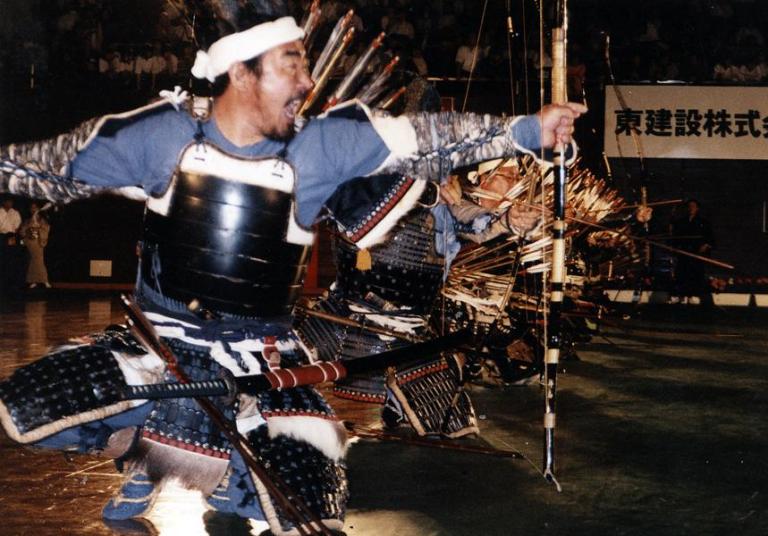

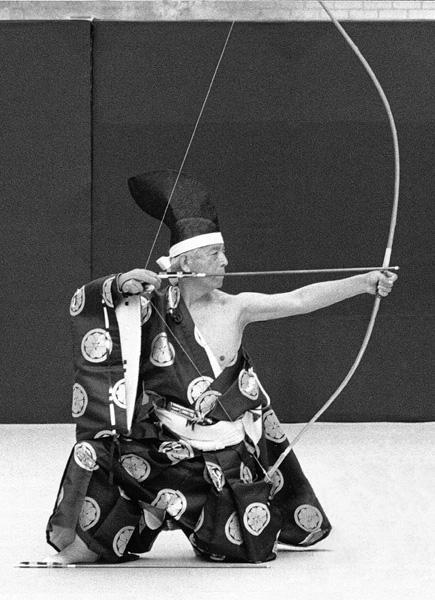
The asymmetrical bamboo longbow (yumi/kyu) has been in use in Japan for more than a thousand years. It served not only as a hunting and weapon of war, but also had ritual significance. Even today, Shinto ceremonies involving the bow and arrow are still practiced, for example, upon the birth of an imperial prince.
The bow was the effective long-range weapon of the Japanese warrior class—the samurai. With the introduction of firearms from Europe in the 16th century, the bow lost its military significance.
Under the influence of Shintoism and Zen Buddhism, archery evolved into shugyo, a spiritual practice dedicated to training the mind and body. In this respect, kyudo means much more to the serious practitioner than simply a sport or a pleasant leisure activity. Visible signs of this include the slow sequence of movements following strict rules, as well as the beauty of the traditional attire and equipment.
Automatically translated by DeepL